
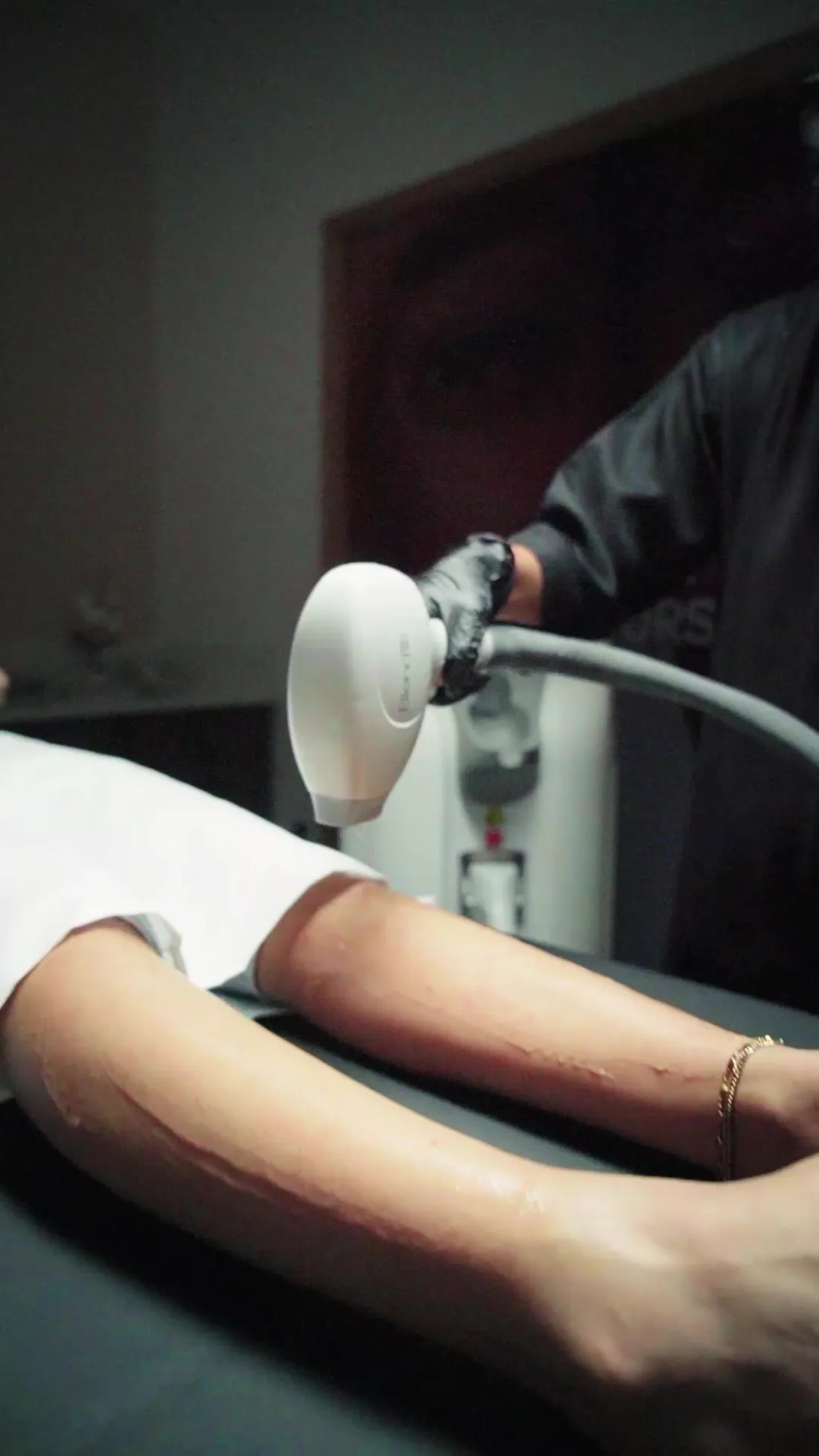
Three methods come up whenever people in Pakistan ask about getting rid of unwanted hair for good: IPL, laser and electrolysis. All three go after the hair follicle rather than just the hair above the skin, which is why they last longer than threading, waxing or shaving. They work in very different ways, though, and that changes who each one suits, how many visits it takes and what it costs.
What is the difference between IPL, laser and electrolysis?
IPL (intense pulsed light) sends a broad flash of light across many wavelengths. The pigment in the hair absorbs the light, turns it into heat and damages the follicle. Because the light is spread across a range, some of it is also absorbed by pigment in the skin.
Laser hair removal works on the same idea, but a laser uses one focused wavelength chosen to reach the follicle. Clinic lasers include diode, alexandrite and long-pulsed Nd:YAG. The doctor sets the wavelength, energy and pulse length for your skin and hair.
Electrolysis does not use light at all. A very fine probe goes into each follicle, one at a time, and a small electrical current destroys it. DermNet describes three types: galvanic, thermolysis and a blend of the two, and notes it is one of the few methods that may give a permanent result.
IPL vs laser vs electrolysis: a side by side comparison
This table covers the points people most often ask about at a consultation. It is a general guide; your doctor checks your own skin and hair first.
| Point | IPL | Laser | Electrolysis |
|---|---|---|---|
| How it works | Broad spectrum light heats the hair pigment | One focused wavelength heats the hair pigment | Fine probe and electrical current in each follicle |
| Hair colour | Needs dark hair; poor on white or grey hair | Needs dark hair; poor on white or grey hair | Works on any hair colour |
| Skin tone | More care needed on brown skin | Suits many skin tones when the type and settings are right | Used on any skin tone; pigment marks are possible |
| Speed | Treats an area in one pass | Treats an area in one pass | One hair at a time, so slow |
| Best for | Lighter skin with dark hair | Medium to large areas: legs, arms, underarms, face, back | Small areas, stray hairs, white or grey hair |
| Result | Long-term hair reduction | Long-term hair reduction | May be permanent for each treated follicle |
| Common side effects | Redness, swelling, risk of dark or light patches | Redness, swelling, rarer blistering or pigment change | Redness, rarer scarring or pigment marks |
Which hair removal method is safest for brown and darker Pakistani skin?
For most Pakistani skin tones, a medical laser with the right settings is usually the safer and more effective choice of the light based methods. Brown skin has more melanin, so it competes with the hair for the energy. That raises the risk of burns and of dark or light patches if the device or settings are wrong.
A 2020 systematic review of hair removal in skin types III to VI (the range that covers most people in Pakistan) found results from the different clinic lasers and IPL were broadly similar, with a trend towards more hair reduction after laser. The long-pulsed Nd:YAG laser caused less post inflammatory darkening than IPL. Lasers scored higher for discomfort.
So the device matters, but so does the person using it. The American Academy of Dermatology says laser can be done on dark skin but must be done very carefully, by a doctor skilled in lasers. At Venus Aesthetics, laser hair removal uses a medical diode laser with skin cooling, and the settings are chosen for Pakistani skin tones after a doctor's assessment.
Is electrolysis better than laser hair removal?
Electrolysis is better than laser for some jobs and worse for others. Its big strength is that it does not rely on pigment, so it can treat white, grey, blonde or red hairs that light based methods cannot see. That makes it useful for a few stubborn hairs on the chin or eyebrows.
The trade off is time. DermNet notes that galvanic electrolysis can take a minute or more per hair, and results depend heavily on the skill of the person doing it. Clearing full legs, arms or a man's back this way would take a very long time. Redness for a few days is common; scarring and brown or white marks are possible. People with a pacemaker should not have electrolysis.
For a large area of dark hair, laser is usually the more practical route. Some people use both: laser for the bulk of the hair, electrolysis for the few white hairs left over.
Are home IPL devices as good as clinic laser?
Home IPL devices are built to be safe for untrained use, so they usually run at lower energy than clinic machines. Results tend to be slower and milder, and they need regular use to keep hair down. Before buying one, read the device's own guidance on skin tone and hair colour; many are not designed for darker skin or light hair. Stop and see a doctor if the skin blisters, darkens or stays red.
A clinic treatment adds a doctor's check of your skin, hair and medical history, settings adjusted to you, and skin cooling during the session.
What affects the cost of laser, IPL or electrolysis?
The price of any of these methods depends on the same few things:
- Size of the area. Upper lip and full body are very different jobs.
- Hair and skin type. Thick dark hair on lighter skin usually responds faster than fine hair.
- Hormones. Hair driven by hormones, for example with polycystic ovaries, may need more visits and maintenance.
- Method. Electrolysis is charged by time, so a large area adds up quickly.
- Who does it. A doctor led clinic with medical equipment is not the same as a salon device.
At Venus Aesthetics the laser consultation is free and with a doctor. You get a written plan and a per area or full body quote before you decide, and that quote is valid at all 8 branches in Lahore, Karachi, Islamabad, Faisalabad and Gujranwala. Our guide to what drives laser hair removal cost in Pakistan goes into more detail.
When should you see a doctor about unwanted hair?
Unwanted hair is often just genetics, but sometimes it points to a hormone problem that needs checking before any hair removal. The NHS advises seeing a doctor if thick dark hair grows on the face, chest, tummy or back, especially with irregular periods, and urgently if it appears suddenly along with a deepening voice or more muscle. In Pakistan, women with polycystic ovaries often notice chin and upper lip hair first.
A dermatology consultation at Venus Aesthetics is Rs 3,500, by appointment only. The dermatologist can look at the pattern of hair growth and advise on next steps alongside any treatment.
Timing tips for Pakistan
- Sun and tanning. Keep the area out of strong sun before and after laser. A fresh tan raises the risk of pigment changes, so the Lahore and Karachi summer needs extra care.
- Wedding season. Laser is a course spread over months, so brides and grooms do better starting well before November to February. See our bridal skin prep timeline.
- Medicines. Tell the doctor about any acne tablets, recent cold sores or a tendency to scar or keloids.
How to choose the right hair removal method for you
Pick electrolysis for a few white, grey or very fair hairs. Pick a medical laser for larger areas of dark hair, especially on brown skin, done by a doctor who adjusts the settings to you. IPL can work well on lighter skin with dark hair but needs more caution on Pakistani skin tones.
Before your consultation, note which areas bother you most, any medicines you take, whether your periods are regular and whether you have a tan. Ask the doctor which method suits your skin and hair, and why. Book a free consultation at any of the 8 Venus Aesthetics branches, for example laser hair removal in Lahore or Islamabad, on WhatsApp at 0311 111 7546, or through the booking form.